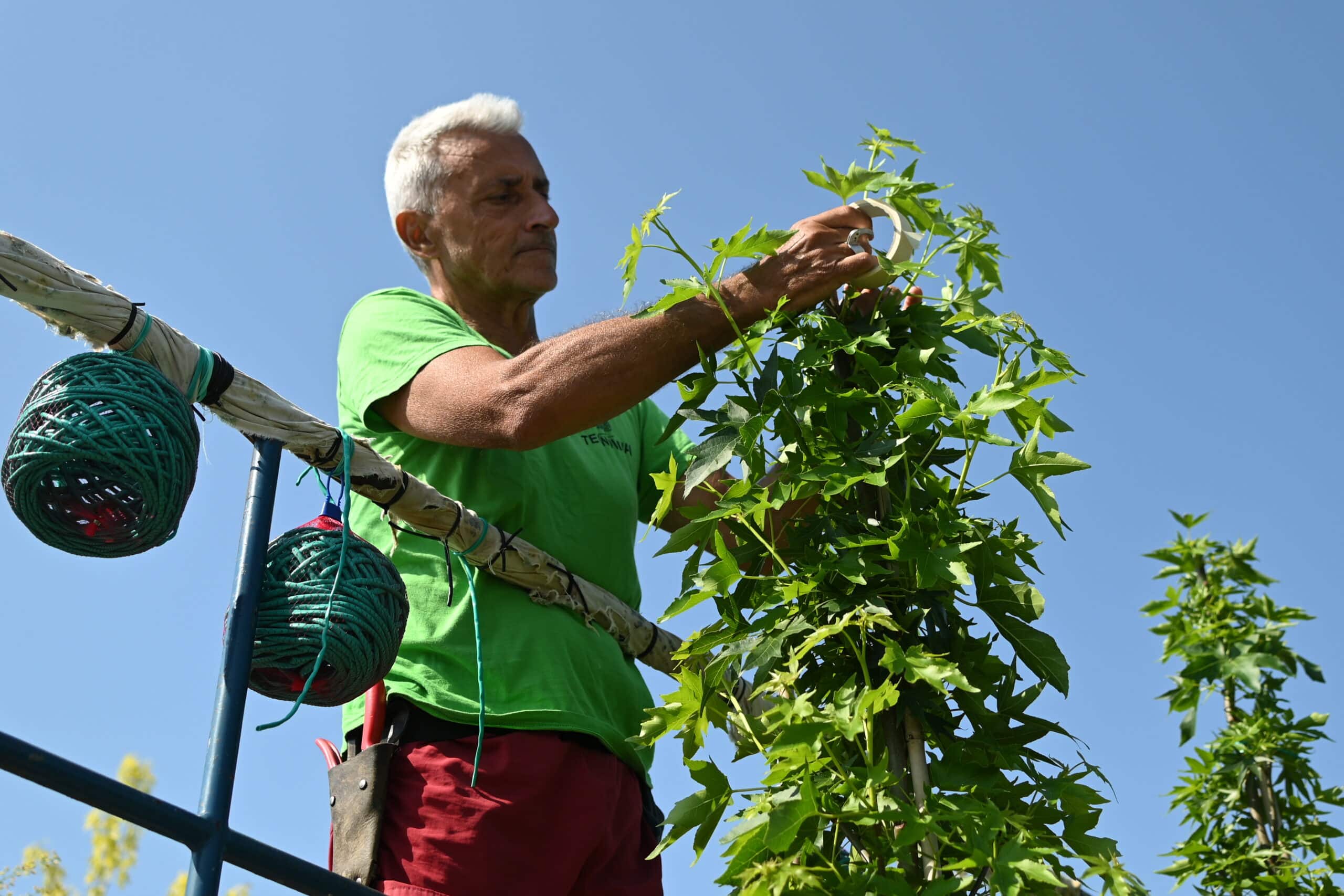
For professionals, knowing how to assess a tree before purchase is a skill that reduces risk and unexpected costs. Here is how to assess tree quality at the nursery using a practical checklist designed for those selecting plants for professional projects.
Why a checklist helps reduce purchasing risk
A tree that appears healthy can conceal structural problems that are not obvious at first glance. Applying a systematic checklist to every purchase helps identify issues early that might otherwise emerge only after planting, when replacement costs are much higher.
Root system: what to check
Roots should be well distributed, with no circling or constrictions that could compromise the tree’s future stability. For root-balled or container-grown specimens, the firmness and moisture of the root ball are further direct indicators of plant health.
Structure and crown: signs not to ignore
A straight trunk, balanced branching and the absence of poorly healed wounds are signs of correct growth without forcing. As already explained in how to recognise a quality plant, growth rate should never come at the expense of the specimen’s structural strength.
Documentation and traceability
A reliable supplier should be able to provide clear information on provenance, growing method and any certifications, as described in how to choose a wholesale nursery. Traceability is not merely a formal requirement in many specifications, but a practical indicator of a nursery’s professionalism.
If you would like to discuss how we assess the quality of our plants before supply, our team is available for a technical consultation.