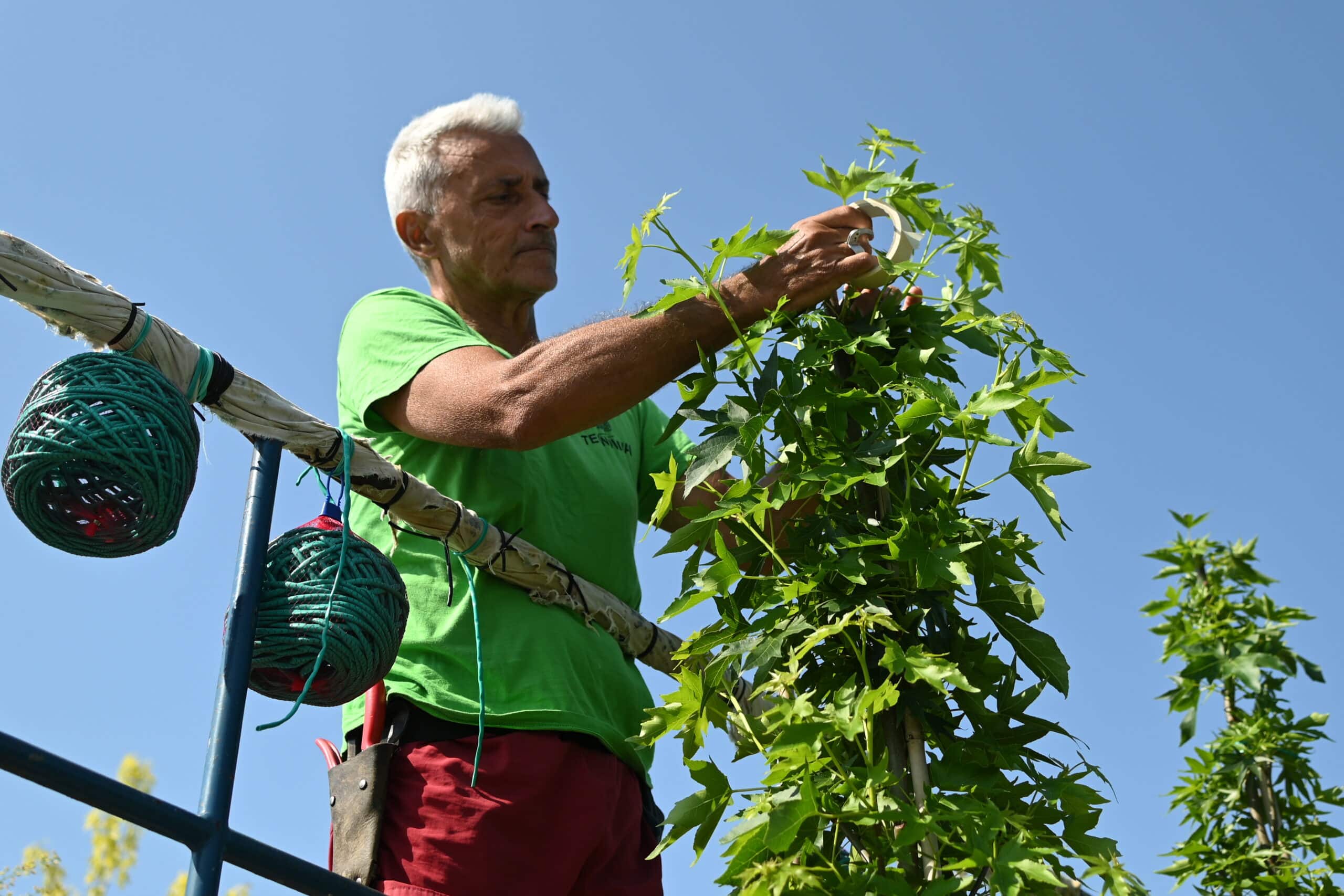
Recognising a quality tree is not simply a matter of appearance. When a client enters a nursery, the crown is often the first thing they notice: a full, well-balanced and harmonious tree naturally catches the eye. However, anyone who works with ornamental trees every day knows that true quality is also found elsewhere.
How to recognise a quality tree: what to look for
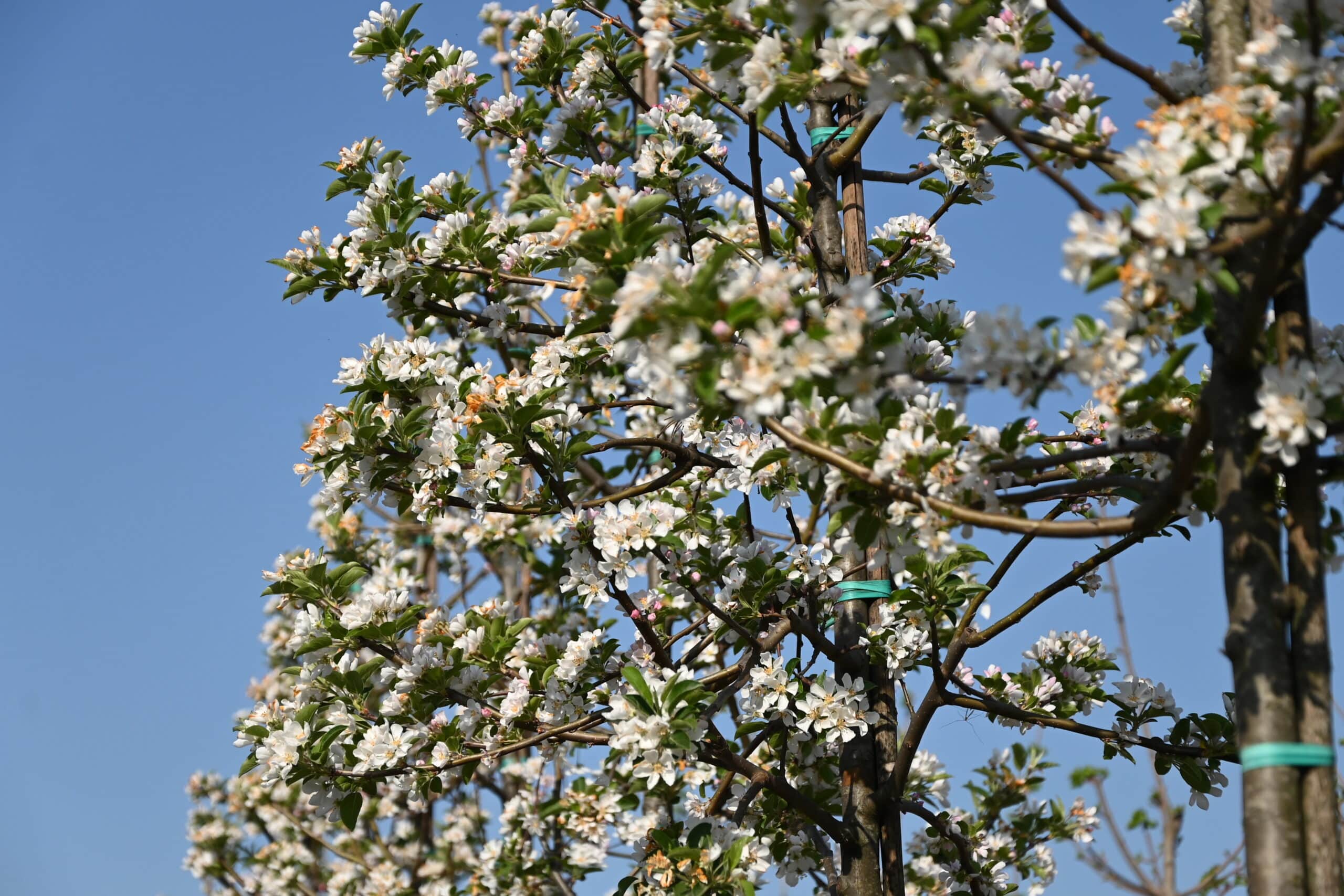
It is visible in the trunk, the formation of the crown, the pruning, the root system and the way the tree has developed over the years.
At TECNOVIVAI, we often talk about nursery quality because we do not want to use it as a generic phrase. For us, quality means selection. It means inspecting a tree before offering it. It means recognising what works, what raises concerns, what is suitable for a specific project and what does not meet the required standard.
A quality tree must have a sound structure. The trunk should be straight, clean and free from significant defects. The crown should be evenly formed, without obvious gaps or faults that could compromise the finished result. Major wounds, water shoots and work carried out at the wrong time all leave signs. Experienced nursery professionals know how to recognise them.
Season also matters. At certain times of year, trees appear more attractive because they are in leaf, with greater volume and colour. Yet an important part of the assessment comes when the tree’s underlying structure is visible. This reveals how it has grown, how it has been managed and whether pruning was carried out at the correct stages.
Pruning is not a minor detail. It requires experience, time and correct timing. Working before active growth resumes helps guide the tree and maintain a coherent form. Pruning is not simply about making cuts: it requires a clear reason for each intervention and an understanding of the desired outcome.
This is particularly important when selecting trees for avenues, parks, structured gardens or landscape projects. In these settings, a tree must do more than simply occupy a space. It must integrate well, develop in a balanced way, support the design over time and reduce risk for the specifier and client.
For this reason, TECNOVIVAI does not operate as a simple catalogue. We prefer to listen to the requirement, understand the context and recommend the most suitable solution. Some clients arrive with a species already specified. Others are looking for a particular size, form, availability or alternative solution. Our role is to guide them clearly.
Quality also extends to order preparation. A consistent supply requires attention: carefully selected trees, correct sizes, uniformity where required, and careful loading and handling. These stages are not always visible, but they make a real difference when the nursery stock arrives on site.
Anyone purchasing ornamental or standard trees for a project knows that every mistake has consequences—for the schedule, the finished result and the relationship with the end client. Choosing a reliable nursery therefore provides greater peace of mind.
TECNOVIVAI quality is built on a precise working method: inspect each tree before sale, know the growing fields, follow every production stage, respect the correct timing and give the client a clear, practical answer.
There is no need to make the language complicated. Visit the nursery and observe. Walk along a row, compare two trees and ask why one option is more suitable than another. That is where quality becomes clear.
Are you selecting trees for a project?
Contact us to check availability, sizes and root-balled or container-grown options. Or visit the nursery: quality is best assessed in person.