Anyone walking beneath an avenue of lime trees in flower in early summer immediately recognises their scent. A lime tree at the nursery brings broad shade, fragrant flowering and a long tradition in Italian gardens to a project.
Why the lime tree is one of the most popular ornamental species
Tilia has been valued for centuries for its broad, regular crown. It provides substantial shade even from medium-sized specimens. It is a hardy species that adapts to different climates. For this reason, it has earned a lasting place in tree-lined avenues and historic gardens throughout Italy.
Characteristics of Tilia at the nursery
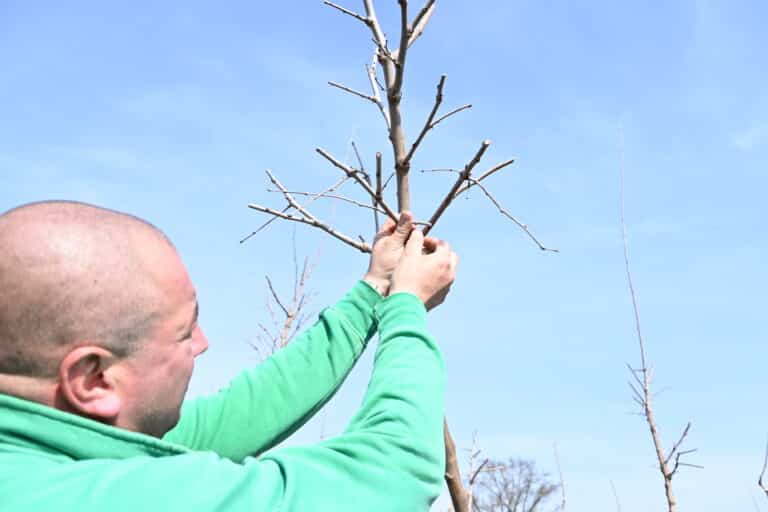
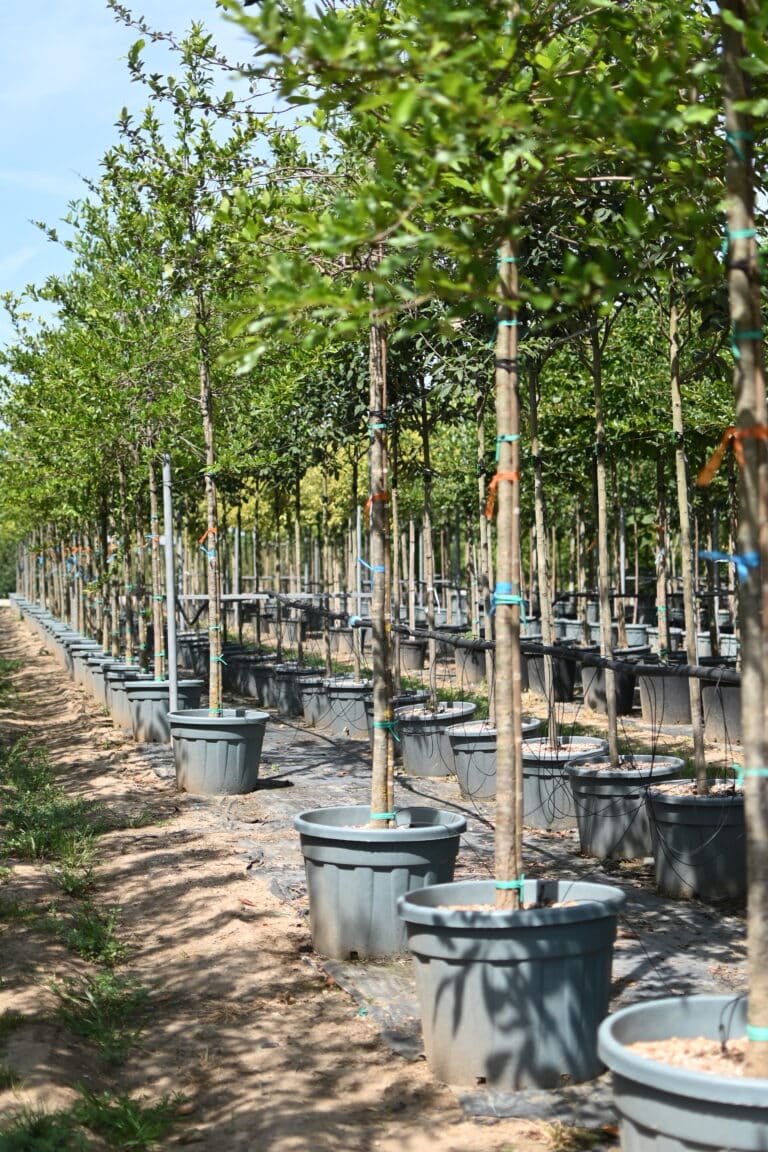
At the nursery we select lime trees for uniform development and shape the crown from the earliest growing stages. This ensures a consistent ornamental effect when specimens are planted in rows, as in tree-lined avenues.
Flowering, fragrance and value in a project
Lime trees flower between late spring and early summer. Their flowering is among the most recognisable of avenue-tree species. The small, highly fragrant creamy-yellow flowers make the tree a sensory landmark as well as a visual one. This is an added value that few other avenue species, such as oak, can offer in quite the same way.
Uses: tree-lined avenues, parks and historic gardens
Lime trees are naturally suited to tree-lined avenues, urban parks and historic gardens. Their broad shade and fragrant flowers contribute to the quality of public space. We assess every specimen using the same criteria described in how to recognise a quality plant before making it available for a project.
For availability and girths of our lime trees at the nursery, our team is available for a technical assessment.